A practical planner for families weighing indoor museums against coastal walks, with drive times, realistic budget bands and the months that actually work.
Dublin: wet-weather cover in the city centre
When rain sets in over Dublin, the reliable indoor cluster sits within a twenty-minute walk of each other: the Natural History Museum on Merrion Street, the National Gallery at Clare Street and the Archaeology collection on Kildare Street, all free to enter and all manageable with children in under two hours each. Arrive at opening, around 10am on weekdays, because school tours fill the halls by 11. Trinity College's Book of Kells draws long queues by mid-morning; skip it with under-eights and use the time for the Ark on Eustace Street, a small children's cultural centre with timed shows.
Beyond the centre, the National Museum of Ireland at Collins Barracks in Stoneybatter has wider floors and easier buggy access than the Kildare Street sites, and the Luas Red Line stops at Museum directly. For a dry afternoon that still feels like an outing, the Casino Model Railway Museum in Malahide, reached on the DART in about 25 minutes from Connolly, suits train-obsessed children. Families often base themselves near the IFSC or Grand Canal Dock for hotel choice, since the DART and Luas both pass through and evening restaurants stay open earlier than in the city centre.
Outdoor days along the east coast and Wicklow
On a dry day, the Dart from Dublin to Bray or Greystones opens up the Cliff Walk, a roughly 7km linear route between the two towns with a firm path and a couple of steep sections near Bray Head. It takes about two hours at family pace; the train back from Greystones is the sensible return. Further south, Glendalough in County Wicklow is about 50 minutes by car from Dublin and offers the flat Green Road walk around the lower lake, suitable for buggies, plus the short climb to the Poulanass waterfall. Parking fills by 10:30am at weekends in July and August.
Powerscourt Gardens near Enniskerry charges an entry fee per adult with reductions for children, and the grounds give three to four hours of walking without traffic. The waterfall there is a short drive further up the hill. My pick for a mixed-weather day is Glendalough over Powerscourt, because the visitor centre provides shelter and the walks are free, leaving budget for a café lunch in Laragh. If you would rather not drive, stay in Bray or Greystones and use the coastal train as the spine of the day.
The west: Galway, Connemara and the Burren
Galway city works well for families because the compact centre puts the Spanish Arch, the Claddagh and the Long Walk within a fifteen-minute stroll, and the Galway City Museum by the arches is free with a decent café. Rainy hours are covered by Leisureland in Salthill, a swimming pool with a shallow children's area, and the Salthill Promenade still functions in drizzle if everyone has waterproofs. Buses from Eyre Square reach Salthill in about 15 minutes.
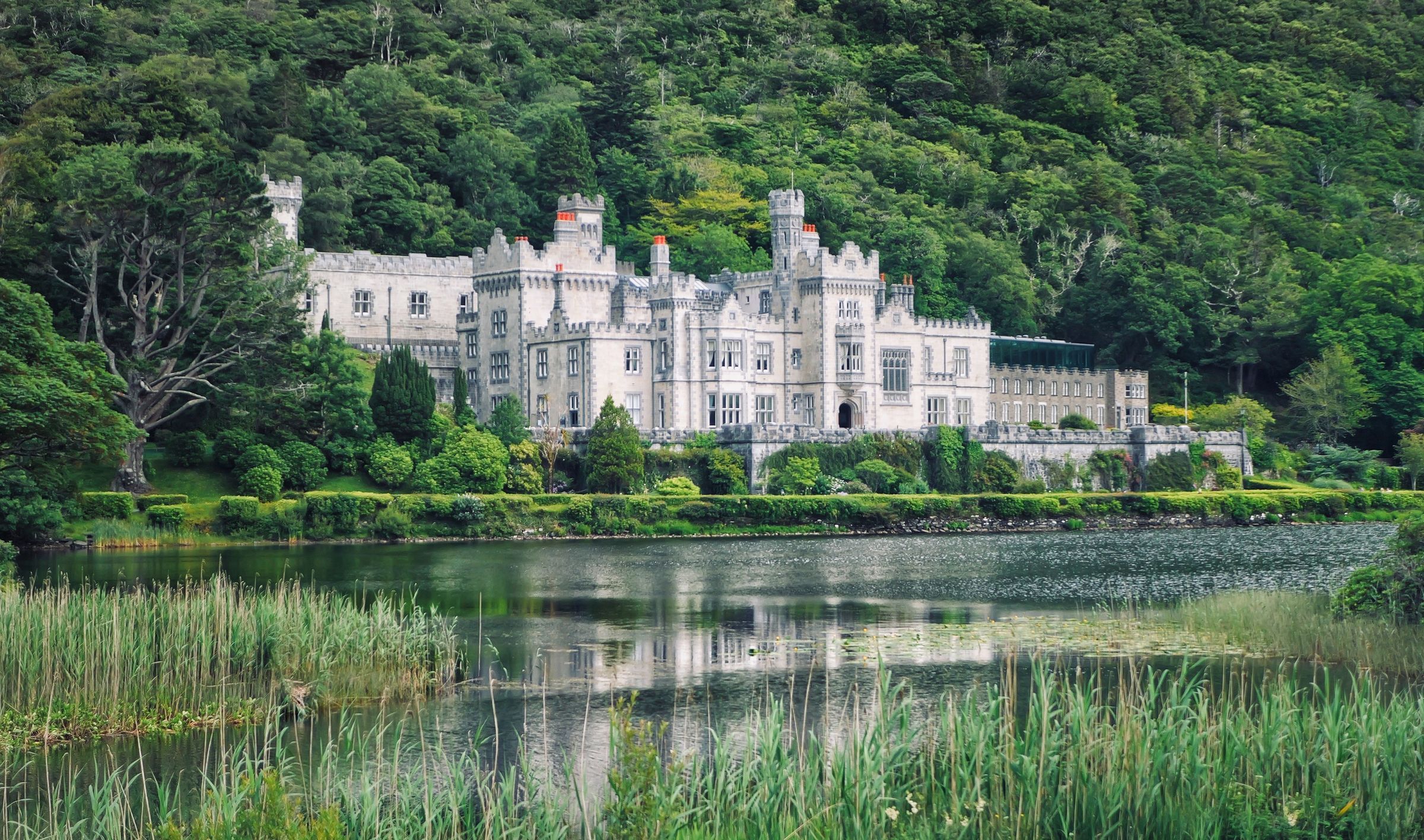
West of the city, Connemara's Kylemore Abbey and the Victorian walled garden take a half day and about an hour's drive from Galway; the Connemara National Park visitor centre at Letterfack has free parking, toilets and marked trails of varying length. South of Galway, the Burren's Pullnabrone dolmen and the Flaggy Shore near New Quay are short, free stops, and the Aillwee Cave gives a paid indoor option when the weather closes in. Book a hotel in Galway city rather than Clifden if you plan day trips, since the city cuts driving time to both the Burren and Connemara.
When to go and what to skip
May, June and September give the best balance for Irish family trips: daylight runs past 9pm in June, attractions are open but queues are shorter than in July and August, and self-catering and hotel rates sit below peak. July and August are warmest but busiest at honeypot sites such as the Cliffs of Moher and Glendalough. October half-term is cheaper again but attractions outside cities cut weekday hours. Whatever the month, plan one indoor and one outdoor option per day and decide after breakfast rather than pre-booking everything.
Skip indoor attractions on the first sunny morning of a trip, since that is when locals and school groups also turn out. Do not attempt the full Cliffs of Moher cliff path with small children in wind; the visitor centre viewing platform is enough. Avoid relying on rural public transport outside Dublin and Galway, where car hire is the practical choice. If you are weighing a city base against a coastal one, book Dublin for museum-heavy days and Galway for landscape days, and split the week between the two rather than commuting.
Frequently asked questions
How many days do we need in Dublin with children?
Two full days covers the free national museums around Merrion Square and Kildare Street, plus one coastal trip on the DART to Bray or Howth. Add a third day if you want Glendalough or Malahide, and keep evenings short since young children tire after museum mornings.
Is Ireland a realistic family destination in winter?
Yes, if you plan around cities. Dublin, Galway, Cork and Belfast have indoor museums, pools and covered markets, and daylight lasts roughly eight hours in December. Expect short days, wet ground underfoot and reduced opening hours at rural attractions, and choose accommodation within walking distance of a town centre.
Do we need a car for outdoor days out?
For Wicklow, Connemara and the Burren, a car is the practical option; rural buses are infrequent and often unsuitable for buggies. Dublin and Galway work well without one using the DART, Luas and city buses. Consider hiring a car only for the middle section of a week-long trip.