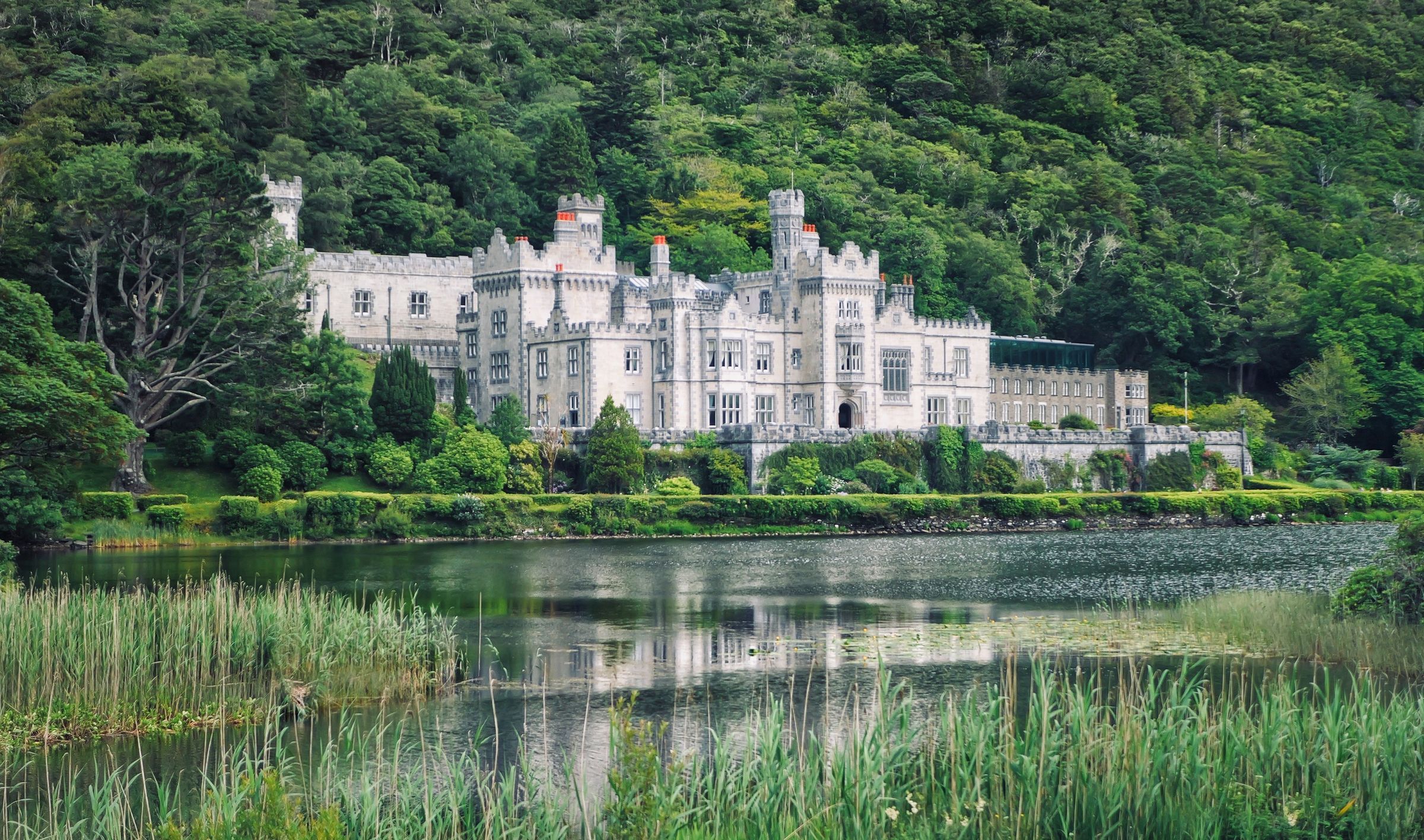
Begin in County Limerick, where the castle hotels cluster more thickly than anywhere else on this site, then cross the Shannon into Clare for one more tower house.
This is a slow trail rather than a checklist. Some properties are ancestral homes opened on an exclusive-use basis, others are self-catering rentals or seasonal apartments. Two castles to visit anchor the route: one in the middle of Limerick city, one on a rock above the River Deel.
Limerick, ancestral homeGlin Castle
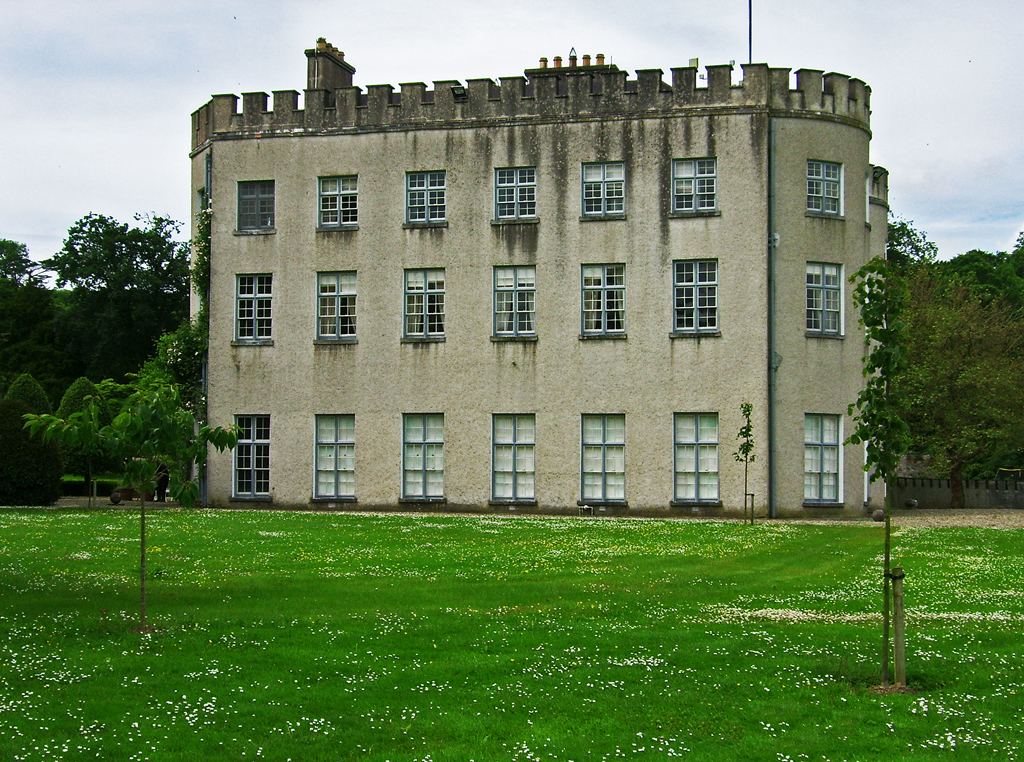
Glin Castle has belonged to the FitzGerald Knights of Glin for around seven centuries, standing on the southern side of the Shannon. The building you see today is Georgian, raised around 1780, when a marriage dowry paid for a neoclassical house in place of the older medieval tower house in the village. It remains the home of Catherine Fitzgerald.
The interiors hold fine plasterwork and collections of Irish furniture, and the grounds run down towards the river. Stays are mainly arranged as exclusive use for weddings, celebrations and private events, though individual reservations are sometimes accepted. Expect the atmosphere of a private residence rather than a hotel, and ask about guided estate tours and castle history when you book.
Glin, Co. Limerick · Castle hotel
Limerick, gothic mansionCastle Oliver

Castle Oliver is a 19th-century Gothic Revival mansion in the Ardpatrick and Kilmallock area, built in 1845 from local pink sandstone quarried on the estate. It was commissioned by Mary Isabella and Elizabeth Oliver Gascoigne and designed by George Fowler Jones as an entertainment palace rather than a fortress, with Scottish Baronial touches across 110 rooms.
Inside are hand-painted ceilings, ornamental corbels and stained glass made by the sisters themselves, along with a ballroom, drawing room, library and dining room. Ireland's largest private wine cellar, with capacity for roughly 55,000 bottles, sits beneath. The castle is hired exclusively rather than room by room, so your group has the run of the place for a gathering or celebration.
Ardpatrick / Kilmallock area, Co. Limerick · Castle hotel
West Limerick, exclusive useSpringfield Castle
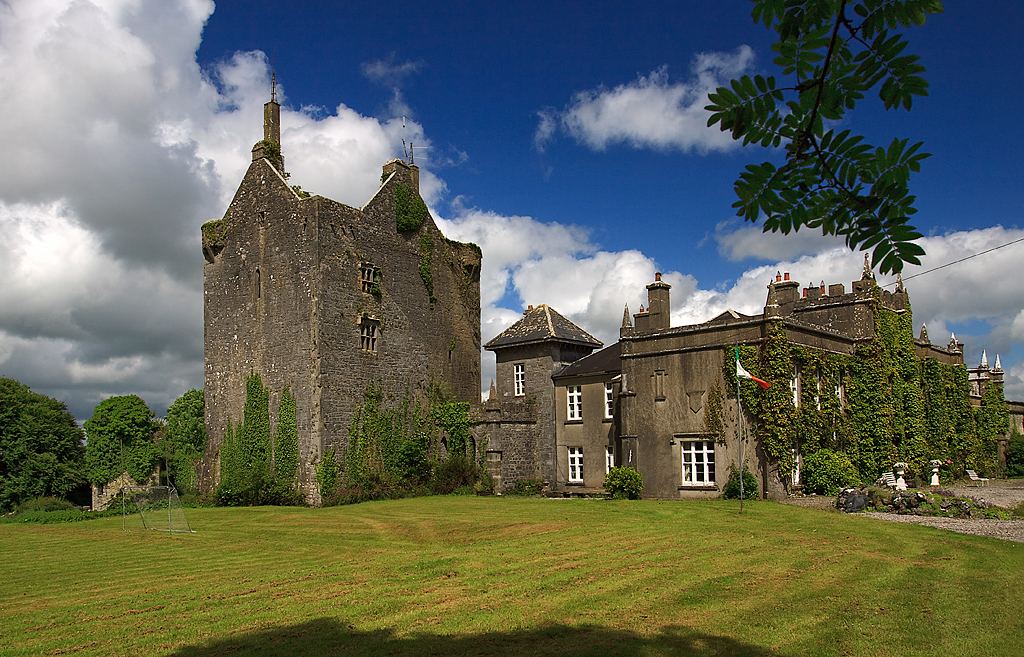
Springfield Castle stands in secluded grounds near Drumcollogher in west Limerick, furnished as a family home with antiques and portraits. It sleeps 15 across 8 bedrooms, with a drawing room around an open fire, a red-walled dining room with a mahogany table, and a study with leather sofas. The kitchen has a full-sized four-oven AGA range.
Leisure is taken seriously here: a sauna and hot tub, a full-sized snooker table, hard court tennis, archery, boules and table tennis. The ground-floor Garden Room is wheelchair accessible. The castle works as a base for day visits to attractions across South West Ireland, and the privacy of the setting means groups can keep to themselves for the length of a stay.
Drumcollogher, Co. Limerick · Castle hotel
Near Adare, self-cateringFanningstown Castle
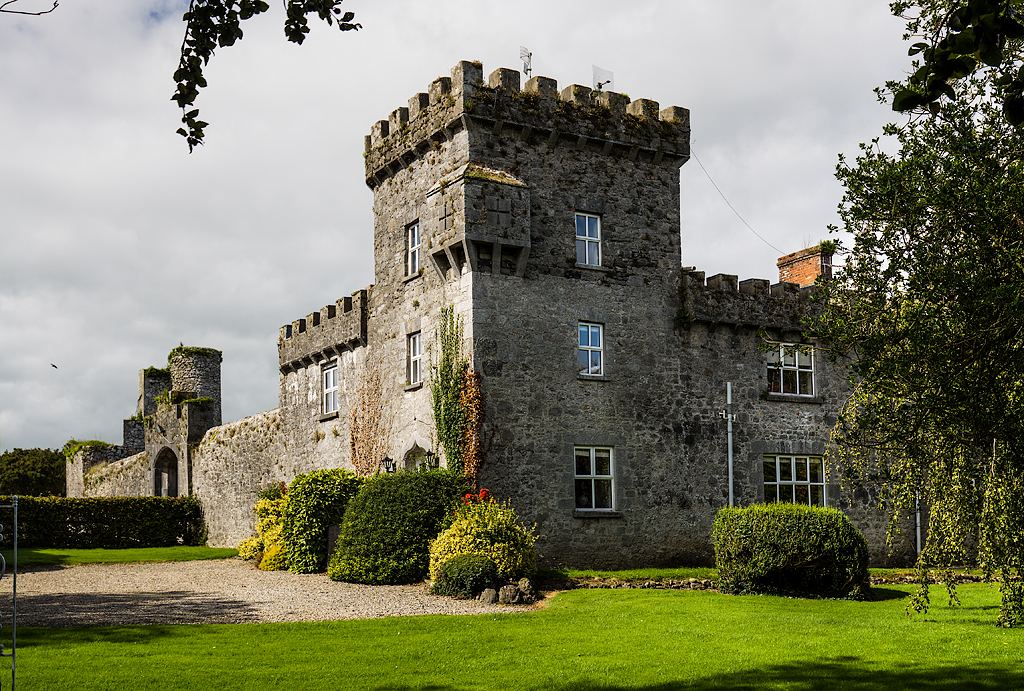
Fanningstown Castle has parts dating from the 12th century, making it a genuine medieval structure rather than a later Gothic exercise. It sits in countryside close to Adare, and is run by the Normoyle family as a four-star self-catering rental sleeping up to 10 guests across 5 bedrooms and 3 bathrooms.
A traditional spiral staircase carries you between floors, and there is a sitting room, a dining room and a fully equipped kitchen with a pine table for ten. Outside, a patio with barbecue facilities extends the living space into the grounds. It suits family groups, small weddings and honeymoon stays, with Adare's village attractions a short journey away.
near Adare, Co. Limerick · self-catering
County Clare, tower houseKnappogue Castle

Knappogue is a genuine 15th-century tower house near Quin in the Burren, historically a MacNamara clan stronghold. Its story runs through Cromwell, the MacNamara family, the Scotts and Lord Dunboyne, then a period as headquarters for General Michael Brennan and the Irish Free State Army, before falling into disrepair in the 1920s. Mark Edwin Andrews bought it in 1966 and restored it to its 15th-century appearance.
Guest quarters include a dining and family room with a working fireplace, a modern kitchen, the Blue Room and Yellow Room, a Master Suite with a canopy bed, and a Drawing Room with a piano. Medieval banquets run seasonally from April to October, and stays are booked as castle rental rather than nightly hotel reservations. Walled gardens and tower chambers reward a slow morning.
Quin, Co. Clare · Castle hotel
Limerick city, Norman castleKing John's Castle, Limerick
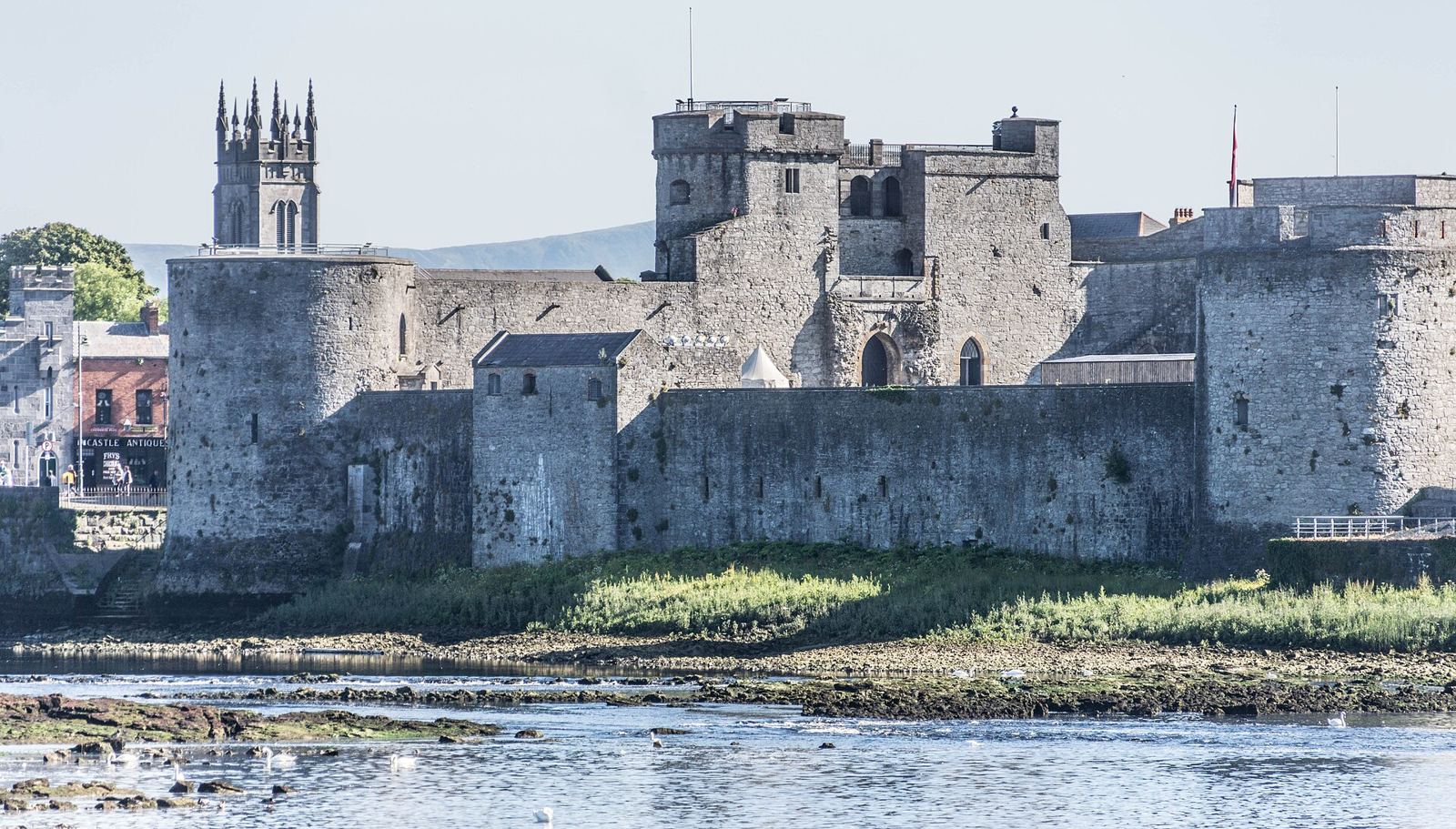
King John's Castle was built on King's Island beside the Shannon on the orders of King John, completed around 1210, on a site the Vikings had settled in 922. The Norman walls and towers withstood five sieges in the 17th century, and damage from the 1642 siege, when attackers undermined the foundations, was never fully repaired.
A redevelopment completed in 2013 added a visitor centre with interactive exhibitions, and excavation beneath the courtyard revealed Viking and medieval remains. You can walk the medieval walls, climb the towers for views over the river, and see the physical traces of the Viking stronghold that came before the castle. A café looks onto the courtyard.
The full guide: history, what survives and the nearest castle hotel
County Limerick, medieval fortressAskeaton Castle

William de Burgo founded Askeaton Castle in 1199 on a rock in the River Deel, a setting that made it hard to take. After 1348 it became the power base of the Earls of Desmond, and in 1579 it resisted an English attack, a stand that helped ignite the Second Desmond Rebellion. The river-island position still reads clearly from the town.
The banqueting hall here ranks among the best surviving pieces of medieval secular architecture in Ireland, with vaulted chambers, tall windows and a medieval fireplace. The grounds once held an early 18th-century building used by a Hellfire Club. The castle is closed to the public for conservation works, so plan to view the exterior from Askeaton and check the current status before travelling.
The full guide: history, what survives and the nearest castle hotel
Before you bookA few practical notes
- Book Glin and Castle Oliver as exclusive-use lets rather than expecting a nightly room; individual reservations at Glin are only sometimes accepted.
- Springfield sleeps 15 across 8 bedrooms and Fanningstown sleeps 10 across 5, so match the property to your group size before enquiring.
- Knappogue's medieval banquets run seasonally from April to October, and stays are booked as castle rental rather than nightly reservations.
- Askeaton Castle is closed for conservation works, so view the exterior from the town and confirm the current status before you travel.